
Structured
Ever feel like there’s too much to do and not enough time? Slipping into procrastination way too often? Employing this simple practice into your day could change your life.
3 minute read
Everyone has their own way of working on and progressing their tracks, some may start mixing as soon as the first track of the song is recorded. Some might choose the top-down mixing method over the more conventional ‘bottom up’ mixing method. Some may opt for a surgical track by track approach, some may prefer doing the heavy lifting on buss processing…
However without an element of organisation and prep work before mixing commences, it can be a nightmare to navigate through your mix when trying to find certain tracks or busses. The knock on effect is sluggish mixing that usually lacks objectivity, and threatens to overhang any deadlines that might be set.
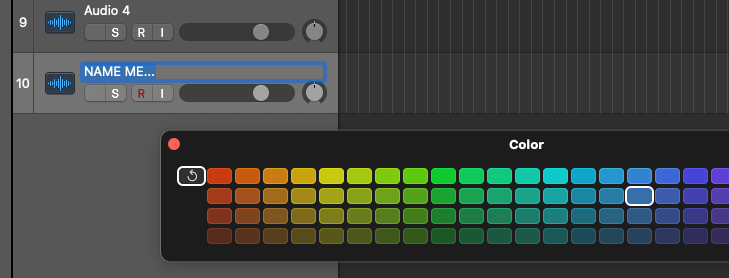
The first place I like to start is an obvious one, but you’ll be surprised by how little people do this when in the pre-production phase. It’s the simple process of adding a name to the new track or buss that you’ve just created.
I understand that in the pre-pro phase of a song, things can get very exciting, the adrenaline starts to pump and the creative flow can blossom, making you want to skip over the un-exciting labelling part. That said, it really only takes about 5 seconds max to put a label on that new rhythm guitar part you’re adding, so there’s no excuse not to really.
If you really can’t bring yourself to label while you go, then at least make it a set task to name all your track elements before mixing commences. This obviously wouldn’t apply if you mix as you go (combining mixing with pre-pro), but in that instance, the previously outlined method would be of great help and convenience to you.
If you want someone else to mix a song for you, naming your tracks is an absolute must! The amount of times I’ve received confusing, muddled, un-named projects… It usually prompts a phone call asking the client where certain tracks are and then requires me to do a job that there’s really no point paying me to do!
Colour is a lovely thing! Why not use it to further simplify the locating of tracks in your mix?
I like to colour code instrument groups to make navigation super quick. Examples of the groups I’d make are one group for electric guitars, a group for the acoustic guitars, and group for all the drum kit tracks, a group for everything percussion etc…
This process makes trawling slowly and repeatedly through a dense track list (even if named!) a thing of the past as you’ll know the colour of the track you’re after, and after a couple of arrangement window and mixing window scrolls, will know the locations of each colour off by heart.
For me it also has the added benefit of making the mixing process more relaxing and fun. A less cluttered, intuitive interface produces a stress-free smooth, efficient mixing session.
Colour coding and obviously naming your buss channels is also very important.
I like to colour my instrument busses, i.e. the destinations of grouped tracks as one colour (beige for me). The effect buss’s I colour in another similar colour, so as to still know it’s a buss track, but to also know it’s an effects track. This helps to further break down an arrangement or mixing window so locating your tracks becomes a breeze.
I would highly recommend making this a common feature of your song production. Once it becomes habitual, you’ll probably find you complete tracks from start to finish a touch quicker.
The practice may not be very sexy or directly generate a top 10 hit, but it’ll sure make the music-making process for you and any other pros working with you, a lot easier!
Enjoy being organised.
Ever feel like there’s too much to do and not enough time? Slipping into procrastination way too often? Employing this simple practice into your day could change your life.

Ever find that a mix sounds overly cluttered but you can’t find the reason(s) why?
This technique could be a game changer for you.

Sometimes seeing the bigger picture on a project can be difficult when you’re too close to it! Doing less could be the answer to your problems…

I use cookies to improve your experience on my site. By using my site, you consent to cookies.
Manage your cookie preferences below:
Essential cookies enable basic functions and are necessary for the proper function of the website.
These cookies are needed for adding comments on this website.
Google reCAPTCHA helps protect websites from spam and abuse by verifying user interactions through challenges.
Google Tag Manager simplifies the management of marketing tags on your website without code changes.
Stripe is a payment processing platform that enables businesses to accept online payments securely and efficiently.
Service URL: stripe.com (opens in a new window)
Statistics cookies collect information anonymously. This information helps us understand how visitors use our website.
Google Analytics is a powerful tool that tracks and analyzes website traffic for informed marketing decisions.
Service URL: policies.google.com (opens in a new window)
Marketing cookies are used to follow visitors to websites. The intention is to show ads that are relevant and engaging to the individual user.
Facebook Pixel is a web analytics service that tracks and reports website traffic.
Service URL: www.facebook.com (opens in a new window)
You can find more information in my Privacy Policy.
Tell me a few details and I’ll get back to you in no time.
Tell me a few details and I’ll get back to you in no time.